|

|
|
|
|
|
|
|
|

|
|
 Photozon-3000's
Deodorization Algorithm
Photozon-3000's
Deodorization Algorithm
|
|
Photozone System's oxidation
reaction processor has adapted
Room Temperature Catalyst theory
to maximize the catalyst reaction
capability by utilizing a complex
oxidation catalyst reaction
mechanism; it causes simultaneous
reactions of partial oxidation,
catalyst oxidation, ozone oxidation,
and photochemical oxidation.
Photozone-3000
effectors have been developed
through many internal and field
tests. To promote excellent
performance of Photozone-3000
effectors, they are aligned
in either slope or tunnel type
arrangement depending on target
structure's inner space requirement
between effectors, photoenergy
amount, catalyst surface area,
and air flow characteristics.
|
|
|
|
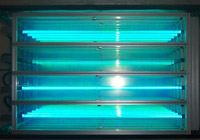
Tunnel
Type
|
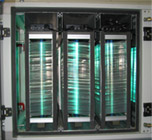
Slope
Type
|
|
|
|
|
System Features
|
|
1. Excellent deodorization
capability (Simultaneous reaction
system
of
partial, catalyst, ozone, and
photochemical oxidation)
2. Highly
efficient effectors performance
(Complex structure of
photoenergy
creation plate and photocatalyst
plate)
3. Nonohmic structure
(Oxidation effectors)
4. Cost-effective
maintenance (Less maintenance
cost compared to
carbon
absorption or filter deodorization
system)
5. High-oxidation
reaction capability promoted
by analyzing target
structure’s
air flow characteristics.
|
|
|
|
Application Examples
|
|
1. Kitchen exhaust fan
deodorization
2. Septic
tank exhaust deodorization
3. Waste
disposal site deodorization
4. Sewage
treatment plant exhaust deodorization
5. Waste
water disposal plant exhaust
deodorization
6. Various
other industrial and commercial
facility deodorization
|
|
|
|
|
|
System Components
|
|
|
Pretreatment
Part
|
Effectors
|
Subsidiary
Catalyst
|
|
|

|

|

|
|
Components
|
Demister
Bag Filter
|
UV
LampCatalyst Plate
|
Subsidiary
Catalyst Trays
|
|
Functions
|
Mixes and pre-treats
pollutant.
Controls
air flow, and filters
out dust.
|
Dissolves Volatile
Organic Compounds
and odoriferous
elements.
|
Converts pollutant
molecules to H20
and CO2, and O3
to O2.
|
|
|
|
|
Deodorization Method
Comparison
|
|
|
Photozone-3000
|
Photocatalyst
Filter
|
Carbon
Filter
|
|
Deodorization
Method
|
Photochemical
Oxidation System
|
Oxidation Reaction
(Extremely low rate)+Absorption
System
|
Absorption System
|
|
Features
|
Cause simultaneous
reactions of partial,
catalyst, ozone,
and photochemical
oxidation.
|
Incapable of
causing proper photocatalyst
reaction because
it is not equipped
with photochemical
effectors.
|
Absorb odors
with the carbon.
|
|
Advantage
|
Perfect deodorization
capability
|
-
|
Satisfactory
deodorization capability
|
|
Disadvantage
|
High cost initial
investment
|
Unsatisfactory
deodorization capability
|
High maintenance
cost
|
|
|
|
|
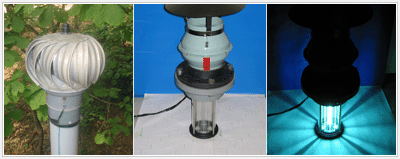
Photozon-3000 Application
Example Picture
|
|
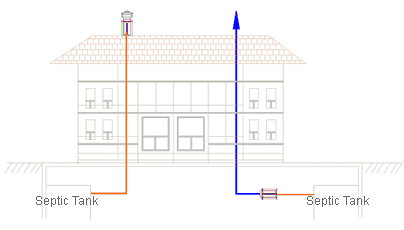
Septic
Tank Exhaust Fan Deodorization
|
|
|
|
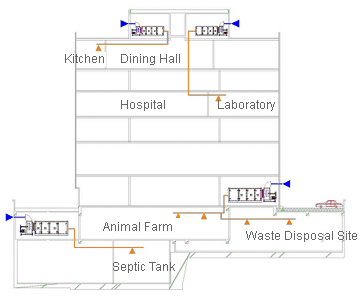
Building
Exhaust Fan Deodorization :
Kitchen, Waste Disposal Site,
Laboratory, etc.
|
|
|
|
|
|
|
|
Photozone-3000
|
|
Photozone-3000 is a convenient
Photozone System especially
made for any mobile or built-in
septic tank ventilation system
which can be directly installed
to a septic tank’s vent without
taking up extra space.
|
|
|
|
Photozone-PT Features
|
|
-Prevent odor leakage outside
septic tank
-2 types are
available: for motor or non-motor
ventilation system
-Minimum
maintenance cost/ Can be setup
to utilize solar energy
-Easy
installation type
|
|

|
|

|














 HOME > Our Products
> Photozone-3000
HOME > Our Products
> Photozone-3000